 From cue to pattern
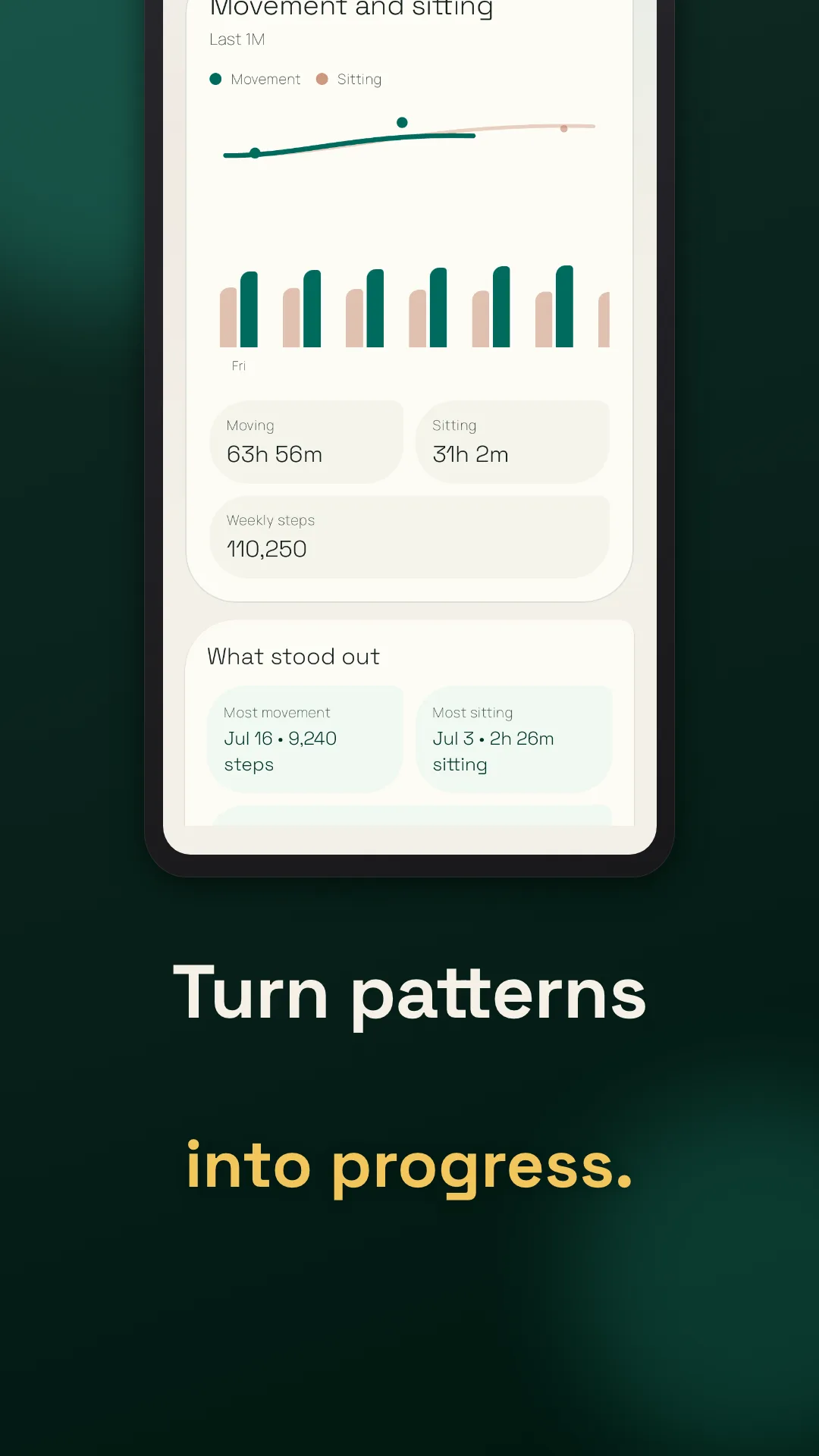
Move More is a movement reminder app for Android and Wear OS users who lose track of time during desk work. It can prompt after a configurable quiet stretch, keep reminders inside selected hours, limit frequency, and show whether brief movement is becoming part of the day.
Why movement disappears during focused work
Long sitting is often not a deliberate decision. It is the default state of a task: a video call flows into email, email flows into code, and the next obvious stopping point never arrives. A reminder creates an external boundary when the task itself provides none.
The cue still has to compete with concentration. That is why a useful app needs more than motivational language. It needs timing controls, a small response, and feedback that helps you tune the system rather than blame yourself.
After how much quiet time should the app consider a prompt?
During which days and hours can a prompt realistically lead to movement?
What one- to five-minute action is easy in your environment?
Which periods remain flat even after reminders—and which cues are consistently completed?
What to do when a reminder arrives
The app does not require a formal workout. A brief response is easier to repeat and less disruptive to a real workday. Depending on your mobility and environment, options can include:
- standing and changing posture;
- walking to refill water or speak to a colleague;
- taking a short lap around the room or home;
- doing a comfortable household task;
- using a standing desk for the next portion of a call; or
- following movement advice already provided by a qualified professional.
A 2022 meta-analysis found that micro-breaks had small positive effects on vigor and fatigue, while the effect on overall performance was not statistically significant and varied by task. That is a useful reason to avoid exaggerated “instant productivity” claims: a short break may support well-being without guaranteeing that every task becomes faster.
How to choose the right movement reminder
| Your priority | Look for | Potential fit |
|---|---|---|
| Android + Wear OS | Paired reminders, synced settings, watch progress | Move More |
| Guided movement library | Exercises or activity instructions after the prompt | Moova or Wakeout, depending on platform |
| Watch-first utility | Standalone inactivity logic and watch complication | Wear Stand-up Inactivity Alert |
| Simple free multi-platform nudge | Minimal setup and playful hourly prompt | SuperMoo |
| One focused browser session | Private interval timer without installation | Move More’s free stand-up timer |
For a detailed decision, read the movement reminder app comparison for desk workers. Move More is strongest when Android, Wear OS, configurable reminder logic, and history matter more than a large guided-exercise catalog.
If you forget to move, optimize the cue. If you receive prompts but do not know what movement to do, prioritize guided activities. If you dismiss reminders because they are mistimed, prioritize movement context, schedules, cooldowns, and daily limits.
Common questions
Frequently asked questions
Is a movement reminder the same as a workout app?
Can I use Move More while working from home?
Will short breaks improve productivity?
Can the reminder detect actual sitting perfectly?
Sources and verification
We checked the official product pages and public-health sources below on 2026-08-18. Features can change, so confirm the latest details before choosing an app.
- Move More: Stand Up Reminder — Google Play listingGoogle Play / Vitality Trails
- “Give me a break!” — systematic review and meta-analysis of micro-breaksPLOS ONE / PubMed Central
- Computer prompts for breaks in sedentary behaviour — systematic review and meta-analysisInternational Journal of Behavioral Nutrition and Physical Activity / PubMed Central
- Moova: Stand Up & Move More — Google Play listingGoogle Play / Moova
- Wear Stand-up Inactivity Alert — Google Play listingGoogle Play / DYNA Logix
- SuperMoo stand-up reminder — official product pageSuperMoo
- Wakeout movement reminder app — official product pageWakeout
Written and checked by Harel Herer, the independent developer of Move More. Comparisons use public product information and disclose where Move More is the better—or weaker—fit.
Read the editorial policy